[ Back to Historical Fiction ] -> [ Back to Under A War-Torn Sky ]
Why a Sequel?
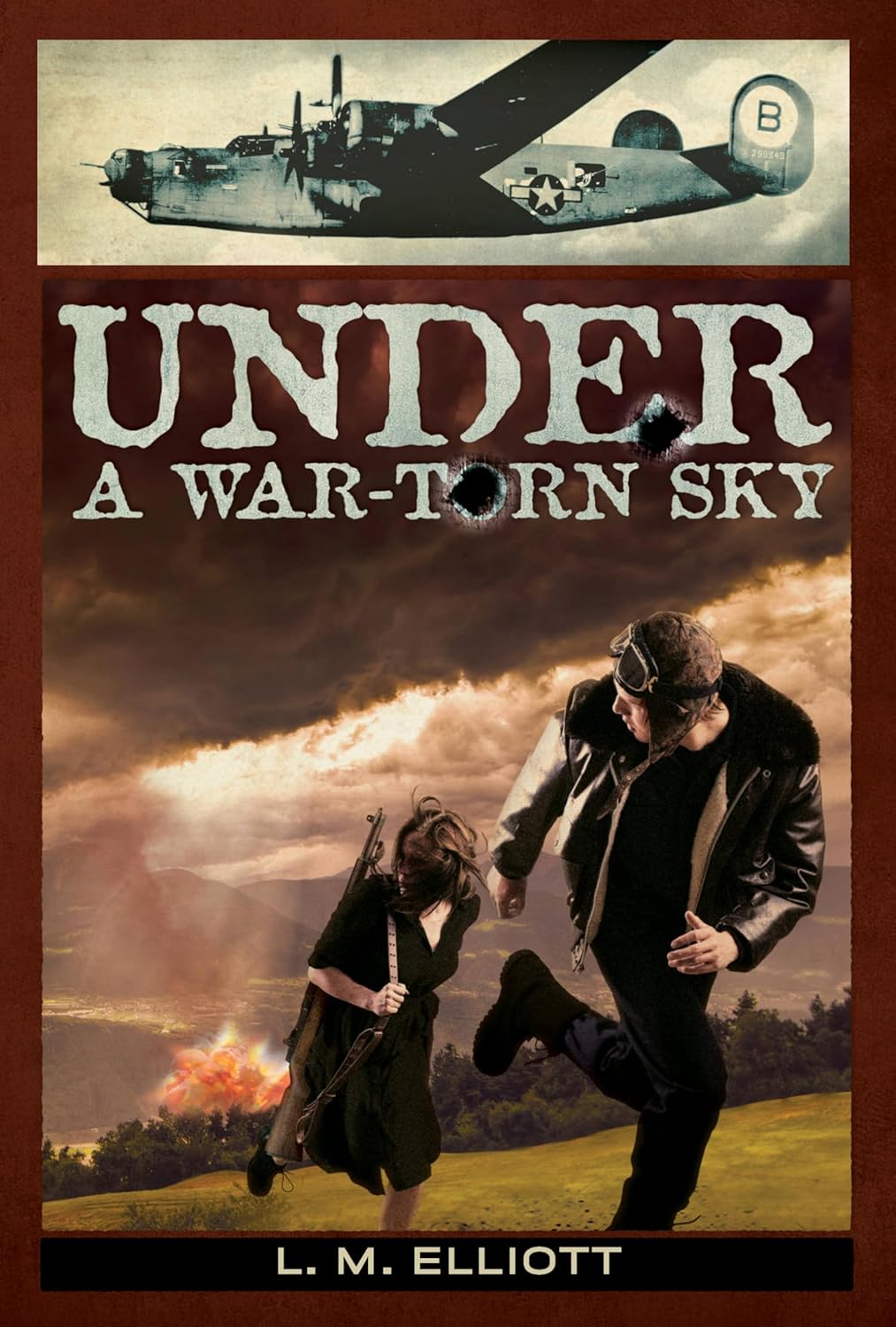
Under a War-Torn Sky
Why Write a Sequel and Companions?
I hadn’t planned any sequel to Under a War-Torn Sky. Heck, I hadn’t planned to write another novel! But both books were born of readers’ overwhelming and deeply touching reactions—first to my magazine article about my father’s surprise homecoming and harrowing escape as a young MIA pilot, and then to my novel’s everyman character Henry Forester and the French civilians who risked everything to save him.
Under a War-Torn Sky’s impact on readers and continuing popularity really has little to do with me—it’s the topic. WWII holds our imagination in a way little else in history does. We rose to a terrible challenge. Something monstrous had to be stopped, and something decent and righteous had to be reclaimed for humanity to go on. And in the case of astoundingly compassionate, courageous civilians who helped Allied flyboys who’d fallen out of the burning sky—painfully young Americans and Brits who were hurt, hungry, terrified, and had no idea where to go—that terrible war was fought one soul and one stunningly risky act of kindness at a time. For more see The Resistance and The 8th Air Force sections.
At the time of its publication in 2001, Under a War-Torn Sky filled a hole in coverage. There really wasn’t much about lost aircrew and the French who helped them, especially not the women. All the masterworks you might know (which I highly recommend) that spotlight women SOE (Special Operations Executive) spies and maquisards came out years after Under a War-Torn Sky did (see Recommendations: Books, Film/TV, Music).
A persistent crossover YA-to-adult read, Under a War-Torn Sky features a large ensemble of supporting characters, and seems to remain one of the few WWII narratives that attracts a “co-ed” readership. Especially among teens. Why? I suspect because protagonist Henry is grit-his-teeth brave, yes, but he’s also vulnerable, thoughtful, idealistic—learning to redefine himself, his beliefs, and the world while shaking off the harsh opinions of his demanding father, a tough-love Depression era farmer. All while evading Nazis. I think that’s what holds the heart of teenage boys. And they started me thinking about a sequel.
Early on, in one of those enormous school assemblies where I’ve had the joy of discussing Under a War-Torn Sky, an 8th grade boy wildly waved his arm to ask a question. But when I called on him, he became oddly shy, his voice barely above a whisper. I had to walk up the aisle and lean in to hear him say: “Do Henry and Patsy (his hometown girlfriend) get married?”
It happened repeatedly. They were worried about whether Henry was going to live happily ever after, with the girl he loved, when he came home from war. There were also “what happened to… ” questions—urgent ones—about Pierre (the boy who saves Henry in the Vercors), Madame Gaulloise, and a fiery young maquisard named Claudette .
Knowing what I do about Post Traumatic Stress Disorder (PTSD)—both from articles I’d written and witnessing war’s lingering impact on my own father—I knew that unabated happily-ever-after for veterans is mostly myth. To be authentic, any aftermath for Henry would need to incorporate a struggle to ease down from battle-ready, quick-flash fight-or-flight reactions, to process grief and regrets and horror at what he’d seen.
Patsy, the character, told me that she would have the sense to know she couldn’t be the fix for him. Henry would have to take on that internal storm before he would be ready to marry. Henry, despite the joy of being home, is riddled with nightmares and flashbacks and worries similar to my readers’—where is Pierre? Because he is haunted by what might have happened to him after his mother was arrested, Henry decides to go back to France to look for Pierre.
So, I went on a new journey, one full of revelations that filled a different “hole in coverage.”
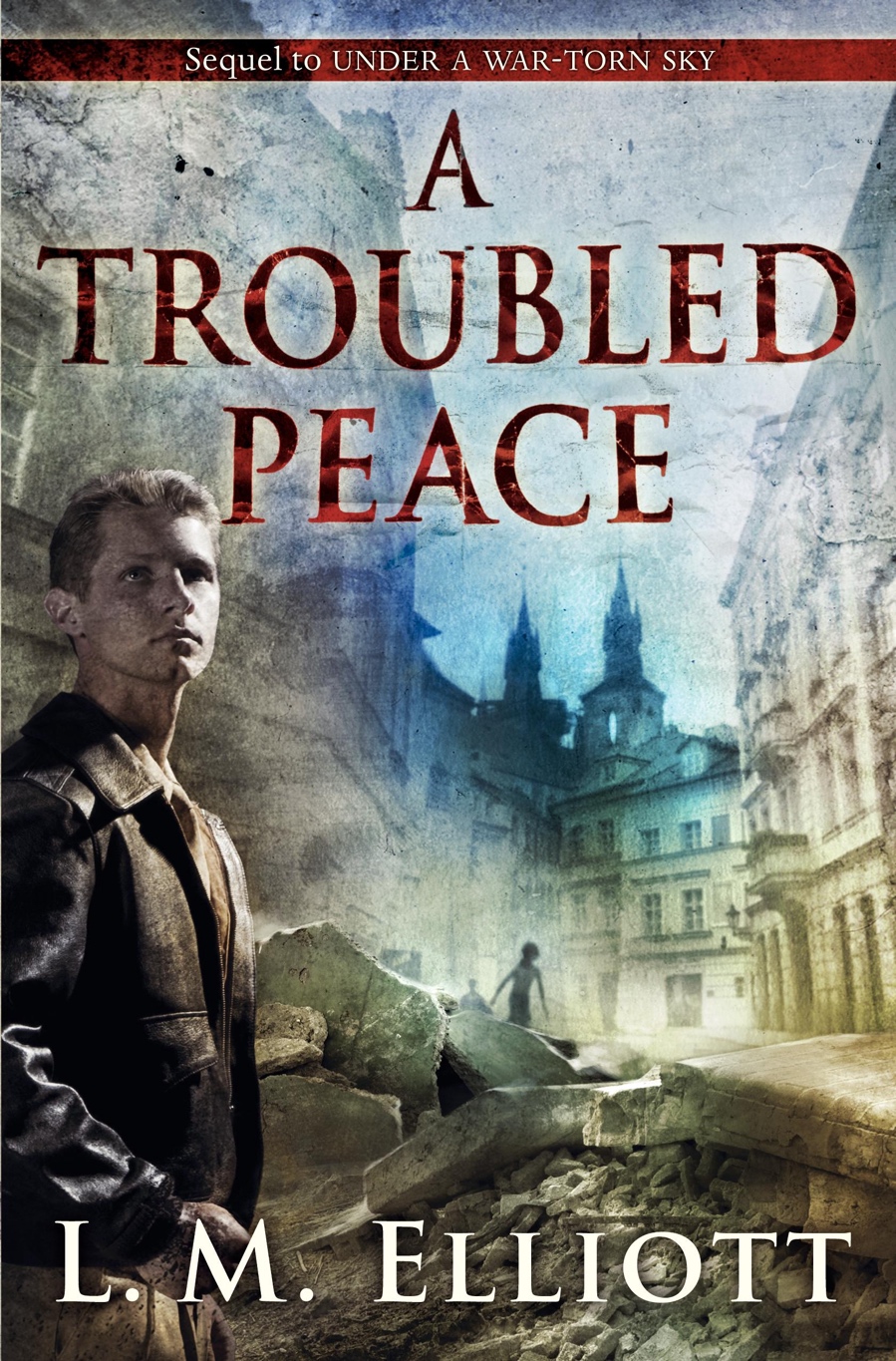
We rarely talk about the chaos of WWII’s aftermath—because we didn’t have to fight those bloody, shattering battles in our cities, our farmland, our homes or neighbor-to-neighbor. I was completely unprepared for the level of chaos left in the wake of liberation—the destruction, the hunger, the violent retributions, and the political upheaval.
But, once again, in researching, I was awestruck by the strength of the human spirit, the good, and the hope that can stubbornly exist and prevail amid others’ cruelty and selfishness. I marveled at their ingenuity and ability to adapt. They reconfigured cars to run on charcoal. One beauty salon in Paris jerry-rigged hair dryers by having men in the basement madly peddling a stationary bike attached to fans blowing air from wood stoves.
Once again, I marveled at individual people whose unwavering compassion and belief in the rights and dignity of each human being rekindled a sense of humanity that allowed reconciliation, a new beginning.
People like the real-life women who inspired the character of Madame Gaulloise—women who hid, fed, disguised, and shepherded lost Americans and then, if they survived the war themselves, helped lead France out of the conflict’s darkness. Young women like the fiery maquisard Claudette, who might have forged and then transported identity papers or coded messages, parts of radio transmitters or weapons hidden in their bags or the hollow handlebars of their bicycles. After D-Day, some took up arms and helped man ambushes or sabotage. These activists, emboldened by their work in the Resistance, would campaign for the right to vote (1944) and for new feminist laws and permanent seats in legislatures. In October 1945, 33 women were elected to the Constituent Assembly, which wrote France's new, post-war constitution. Called the Glorious 33, 19 of the women had been in the Resistance, seven arrested and imprisoned, and three had survived Ravensbrück.
People like a woman whose husband died in Buchenwald who served briefly as her village’s mayor after our troops liberated it. She counted her largest accomplishment being the fact that during her watch, no woman accused of fraternizing with German soldiers was hauled into the town square and shaved—as so many who’d had relationships with occupying Nazis were. A female collaborator had reported her husband to the Gestapo—and yet that mayor could call up that kind of magnanimity within herself. And the townspeople followed her lead.
Getting Henry back into France in early 1945 to look for Pierre, just before Hitler killed himself and Victory in Europe was declared, was a little tricky. But I read about Americans organizing food, clothes, and livestock to ship to France to replenish decimated farms—including boatloads of cows and horses organized by the Church of the Brethen (the beginnings of the wonderful Heifer International). Henry arrives in Marseille on one of those first shipments, helping care for milk-giving heifers in their transatlantic voyage as a “seagoing cowboy.”
Three out of four bridges in France and about as many railways, trains, and canals had been blown up—by the French Resistance to slow German reinforcements or by the retreating Nazis to impede the Allies’ pursuit of them. This made it nearly impossible to transport what little food was being produced, what coal was left to generate electricity, or what supplies the Allies dropped from planes by the tons for civilians. In Paris, for instance, residents were rationed to one hour of electricity per day to cook; French adults four eggs per month. Across the nation, the French were surviving on root vegetables like rutabagas that had survived tanks rolling over them. Mothers desperate to feed their children rioted over bread, butter, and milk.
As Henry heads north to the Vercors—where he left Pierre with monks who promised to hide him from the Milice—he’s stunned by the amount of rubble, by a mob threatening a farmer simply trying to get his milk to market and a la femme au turban—a beautiful young woman, covering her bald head with a scarf to hide being shaved in retribution for her having a German boyfriend. What he finds where Pierre’s village should have been, sickens him more. It’s completely gone.
This time, I was able to research more about the Vercors maquis via the fledgling internet, which led me to an obscure but amazing history of those fighters, culled from survivors, and published in 1978, Tears of Glory. In it, I learned of a man who became one of A Troubled Peace’s most colorful characters—the maquisard leader called Le Patron (real name Eugène Chavant). His daring exploits included successfully raiding the infirmary of Grenoble’s Nazi garrison to steal plaster-of-Paris to set the broken arm of one of his men (he just happened to spot an SS officer’s Mercedes left unattended and made off with it as well).
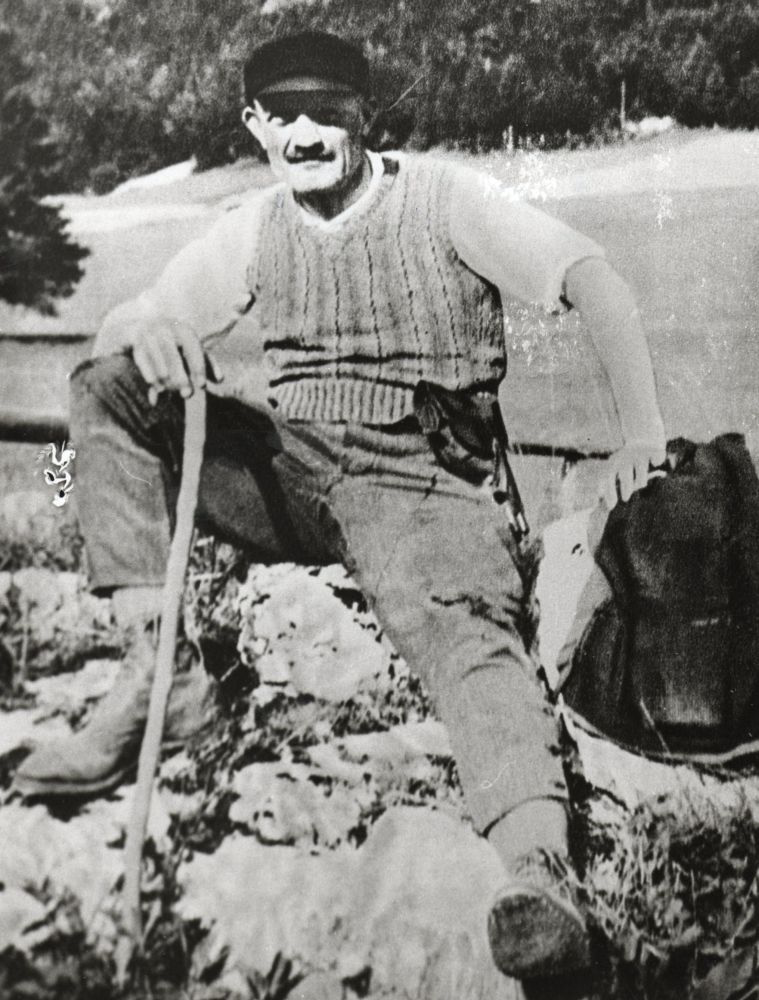
I wrote Le Patron into the narrative and let him be the one to tell Henry the devastating news that Pierre had vanished—like so many children during the war (millions were orphaned and displaced across Europe).
In despair, Henry turns to the person who’d answered so many questions before: Madame Gaulloise. If she were alive, she’d surely know where he should look next. If you haven’t read Under a War-Torn Sky or A Troubled Peace, I don’t want to ruin them by giving too many details or spoilers of her arc across the two books. But I will share that I knew Madame Gaulloise should suggest he search for Pierre at Paris’ train station, Gare de l’Est, because of two lines I read in the afterword of Suite Francaise—a beautiful, unfinished novel by Irène Némirovsky, a Jewish author who perished in Auschwitz.
We can enjoy her compassionate, poetic work because her young daughters managed to carry the scribbled manuscript with them as their governess—and then a succession of nuns willing to protect them—moved the girls from one hiding place to another. Their mother’s book was finally published in 2004. In its afterword, one of her daughters described waiting at the Paris train station where survivors of concentration and labor camps returned. Day after day, she and her sister stood holding a placard bearing their names, hoping their mother or father would step off the train—alive—and see their sign.
Madame has endured much since Henry last saw her. But like the fragrant lilacs defiantly standing and abloom in her garden despite being mostly destroyed when Nazis raided her home to arrest her, Madame is fragile physically. But her spirit, her essence, is as strong and enveloping as ever. Just as she had in Under a War-Torn Sky, she reassures Henry, this time saying emphatically that she would not change a thing in her actions. She saved 46 lost airmen. He’d been her 37th.
She forewarns Henry that he must be strong in Paris as he searches for Pierre—that what he will see at the train station will be very, very hard. She knows because she was one of the Ravensbrück survivors to step off those trains.
Henry gets himself to Paris. He doesn’t find Pierre at the Gare de l’Est. He is told to try the Hotel Lutetia, an elegant art deco hotel in the Saint-Germain-des-Prés district of the city. Occupied during the war by the infamous Abwehr, Hitler’s counter-intelligence agency, they’d fled the hotel as the city was liberated—leaving it well stocked with food, medicine, and linens. So, in stark but practical irony, the French used what had been a center of Nazi cruelty to house and care for returning survivors of concentration camps as authorities looked for and notified their family.
He is hired to work at the Lutetia’s center by its real-life manager Madame Sabine Zlatin—a woman who’d managed to hide and relocate hundreds of Jewish children to Switzerland before the Gestapo raided the Izieu farmhouse haven she’d set up with her husband.
There is so much more aching to share here—about people’s courage in rebuilding, about the people I discovered in research. But I hope you will read A Troubled Peace yourself.
A Homefront Companion Novel
Since I’m talking about the power of research, I’ll add a smidgeon about the origins of two homefront companion works, starting with Across a War-Tossed Sea, a narrative focusing on Henry’s spitfire girlfriend, Patsy, that teen women seemed determined I give them.
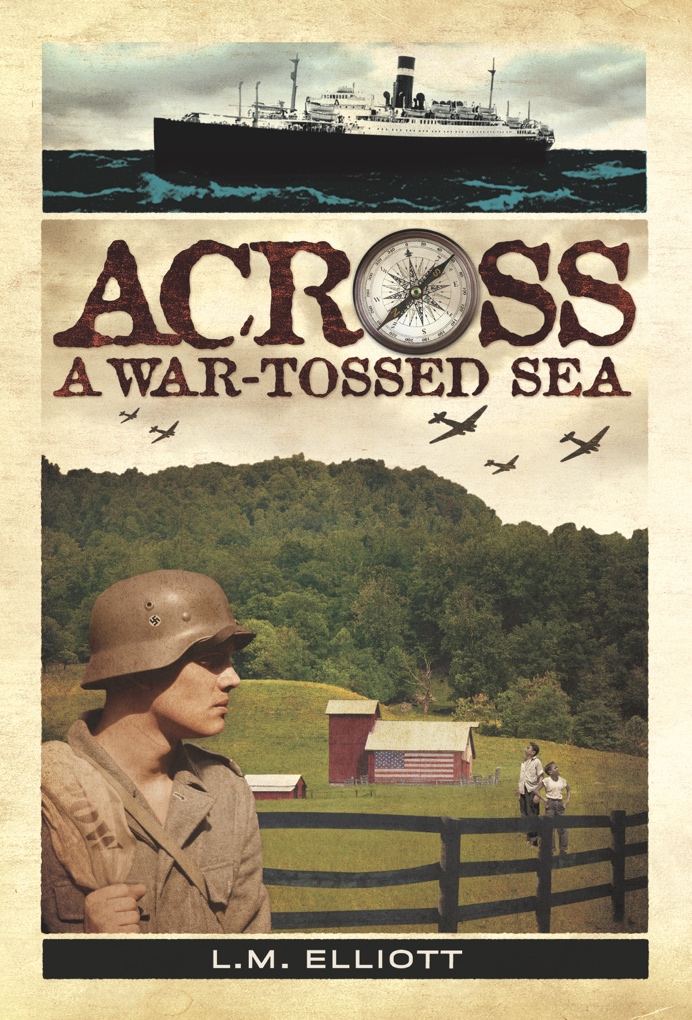
One paragraph in a rather dauntingly thick, 1951 compilation of newsclips in Richmond in WWII gifted me the linchpin I’d need to connect the two stories in simultaneous narratives. Buried in obits, debutante announcements, and descriptions of church bazaars was the fact that in 1940, a Richmond church and private girls’ school were helping place close to 100 British child-evacuees with area families.
Wait, what? I’d been flipping the pages quickly but stopped abruptly to reread those four sentences.
I knew of “Operation Pied Piper,” Londoners sending their children to England’s relatively safe countryside away from the Luftwaffe’s deadly Blitz (the nightly carpet-bombing of London that would kill 43,000 British civilians, including 7,736 children). I did NOT know that 4,000 children risked the two-week voyage across an Atlantic Ocean swarming with Nazi submarines—an exodus halted after one “children’s arc” was torpedoed, killing almost all the 90 children aboard.
So, in the final chapter of Under a War-Torn Sky, Henry’s mother asks Patsy about two London boys staying with her family. Just a toss-in tidbit of surprising history, a quick brushstroke showing the pervasive dangers of the war and how Americans were trying to help our overseas allies. Thank goodness I did! Because that little reference plausibly launched a whole new and parallel story to Henry’s, exploring how two young Londoners could fit into Patsy’s life and her large, raucous Virginia farm family.
Memoirs written by child-evacuees later in life helped me portray my characters’ discombobulation. Those memoirs told of constant worries about their parents still enduring the Blitz, nightmares stemming from witnessing ships in their convoys explode, but also delightful, quintessential British humor—“vomit songs” they wrote to survive seasickness, their expectations of meeting cowboys and Indians and gangsters because that’s what they’d seen in the movies, their dislike of peanut butter, their joy at ice cream and refrigerators and hot showers. Plus, their confusion and shock at segregation, their fury at the German POWs working American farm fields.
In Across a War-Tossed Sea, readers will also learn about Liberty Boats, the integrated workers and “Winnie Welders” who built them in Newport News, and a secret, decoy airfield of fake planes just outside Richmond (no kidding!).
Another Homefront Novel, Spun From “Saved String”
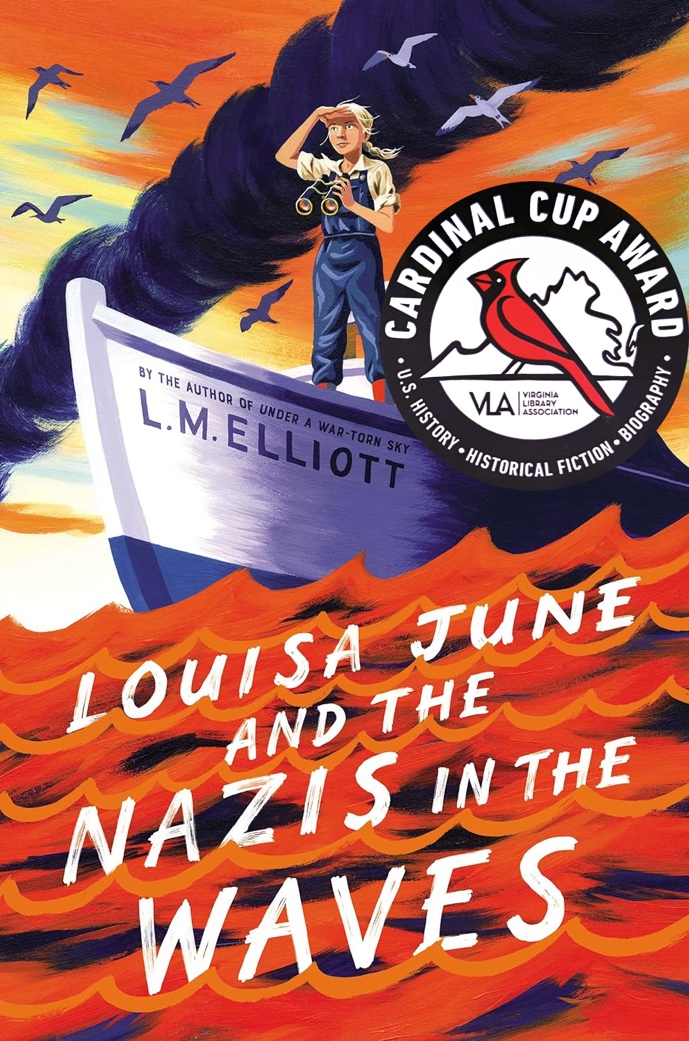
One of the most frustrating things about writing historical fiction is that you can’t possibly include everything you learn in research. Such was the case with Across a War-Tossed Sea and the startling fact that during the first six months of 1942, immediately following Pearl Harbor, German U-boats trolled our East Coast, torpedoing and destroying, on average, one cargo ship each night. Night after night. Leaving oil-slicked waves burning just off our beaches, and killing hundreds of our merchant marine sailors, some as young as 17 and as old as 70.
Louisa June and the Nazis in the Waves gave me the chance to feature those unsung heroes who continued to volunteer to sail those perilous voyages and their equally stoic Tidewater families. Once more, I found my novel’s pivotal events in a seemingly deadly-dry source—an obscure website, uboat.net, that lists every ship hit by Nazis off the American coast and the names of their crews, who lived, who died, their ages. I caught my breath spotting one where a father lived but his son perished (all parents will suck in a breath at that). Louisa June’s story turned into what is perhaps my most lyrical work, certainly in keeping thematically with the search for self and meaning that Henry must undertake while also trying to escape Nazis. I really relished hearing my father’s Tidewater drawl in my mind again as I wrote Louisa June’s family and world.