[ Back to Historical Fiction ] -> [ Back to Under A War-Torn Sky ]
The Resistance
Under a War-Torn Sky
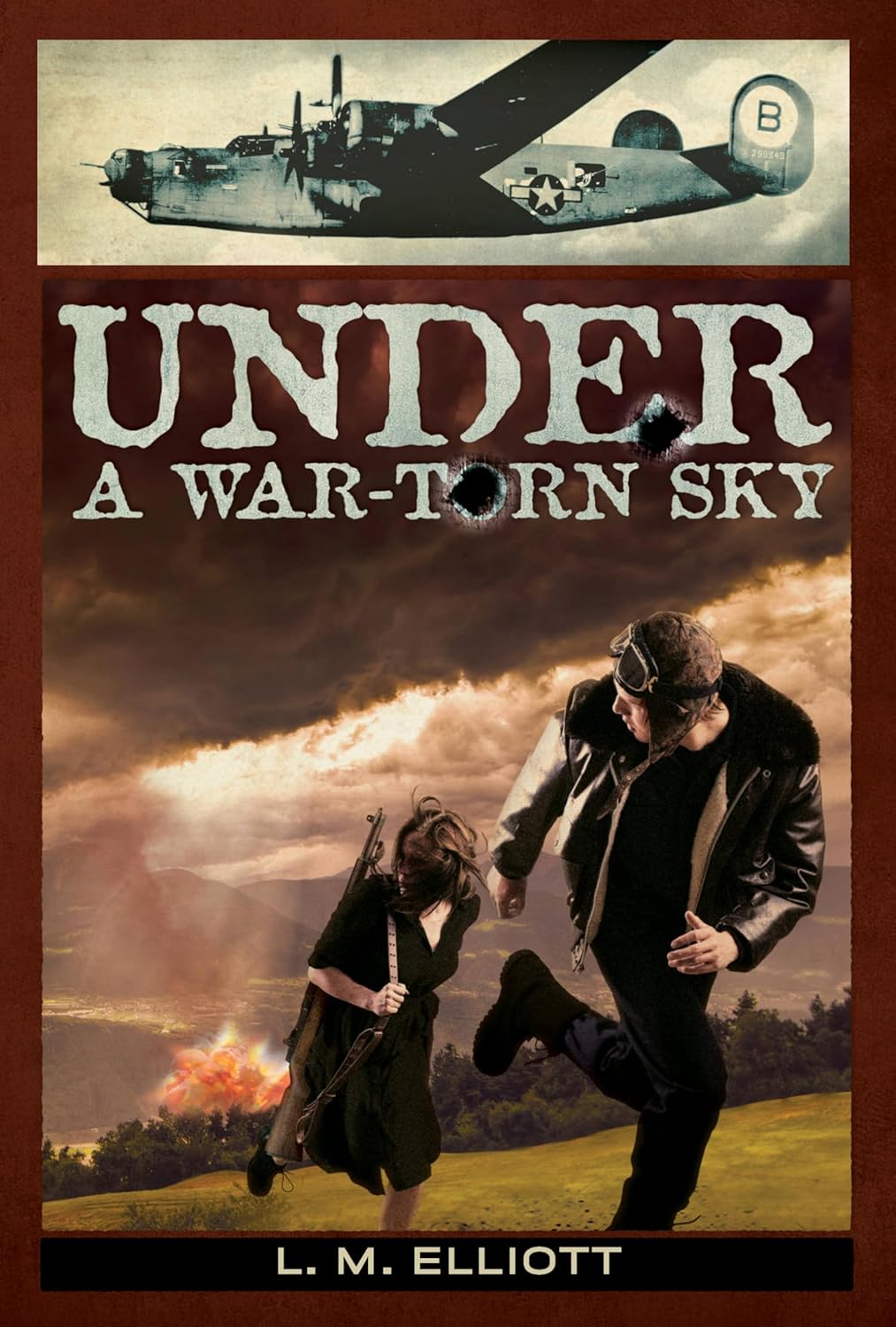
For those who don’t already know, Under a War-Torn Sky was inspired by my father, a B-24 co-pilot, and flyers like him who fell out of burning planes onto Nazi-occupied France. It was behind-the-lines territory, roiling with round-ups, deportations, and horrific retributions for any act of resistance—even as minute as scrawling "Viva la France" on a wall during the night. A land where a startingly large number of citizens agreed with Hitler’s anti-Semitism and embraced the iron-fisted nationalism preached by the Vichy puppet-government the Nazis installed.
If an American flyer survived the Luftwaffe divebombing his plane and setting it ablaze and could parachute out, and then his plummet through clouds exploding with flak and boiling debris, and if his chute didn’t get caught up in treetops or church spires, he’d drop onto ground where most everyone was an enemy.
And yet, I exist—more importantly my beautiful children exist—because a handful of French teenagers, women, and old men saved my father. They risked everything to help a lost, hurt, and frightened young American on the run from the Gestapo. The courage of their kindness, during a time of such carnage and vicious hatred, still takes my breath away.
MI9, the British escape service that helped Resistance groups establish underground “rat lines,” calculated that about 4,000 British and American servicemen were spirited out of Belgium, the Netherlands, and France along these civilian-devised and run escape routes. Ordinary people who stood up to brutality by taking in lost flyboys, often bloodied and dazed from parachuting out of their planes who happened to wander into their farms or villages. They hid, guided, and shared what little food they had—in extraordinary and singular acts of generosity.
But, for each Allied airman led to safety, MI9 calculated that one of those brave Resistance workers died. Caught by the Gestapo—they would be interrogated, tortured, then deported or executed—usually in public to terrorize and break French spirit. One for one. One truly horrible death for one American life saved. Under a War-Torn Sky is as much their story as Henry Forester’s.
The Resistance basically subdivides into three main groups: The Passeurs (who hid and moved flyers, political refugees, Jews and other persecuted groups along escape networks); The Underground Press; and The Maquis (small bands of partisans who engaged in hit-and-run attacks and sabotage):
The Passeurs:
I’ll start by talking about the real-life women who inspired the passeur character Madame Gaulloise. Dauntless, embracing, and breathtakingly generous, she gathers up Henry at the Montreux train station with the fierce protectiveness of the mother she is (of a captured French soldier about Henry’s age). She will come to seem invincible to Henry—a quality many lost flyboys described if lucky enough to be sheltered by this type of passeur: women in their 40s or older, well-heeled, well-read, multilingual, and aristocratic (whether by birth, marriage, or simply attitude and deportment). Flyers followed these intrepid women without question. Their seemingly unflappable aplomb infused airmen with a ready resolve that was absolutely critical to their surviving checkpoints and unexpected twists in their escape plans.
One of the many amazing things about these women is that they often acted all alone, more out of compassion than patriotism, at the drop of a Dior hat. Many—like the Comet Line founder Dédée de Jongh (see below and also my Substack series post #4) or Mary Lindell (see below)—plunged headfirst into the danger of saving others during the chaotic fall of France to Hitler, long before there was any calculated benefit of getting on-the-run airmen back to England with the hope of their flying missions again. They simply spotted a British soldier or RAF flyer who’d managed to escape Hitler’s blitzkrieg and the disaster of Dunkirk and was wandering—clueless and frightened—through newly-seized Nazi territory. They rushed to help—long before the British SOE (Special Operations Executive), created a month later, would be ready to aid resistance groups or “ratlines.” In fact, whatever routes these untrained women and their friends managed to improvise often ended up being some of the most successful and lasting of the war’s escape networks.
Women personified by Madame Gaulloise took advantage of both the sexism of the time and Europe’s lingering social class hierarchies. Universally considered “the gentler sex,” women still didn’t have the right to vote in France (that came after WWII, and in Switzerland not until 1971!) and simply were not considered smart/resilient/plucky enough to think clandestinely. As a result, it could be much easier for women to convince guards of their innocence if questioned about their comings and goings.
Upper-class women had the greatest advantage. They could revert to autocratic disdain to intimidate the heck out of the Reich’s rank-conscious junior officers or foot soldiers. Brought up to revere authority, it was inconceivable to them that a well-heeled matron, adorned in pearls and furs, could possibly be a “terrorist” (Hitler’s label for Resistants). With higher ranking officers, often themselves from affluent families with well-educated genteel women, that ploy didn’t work as well. Women like Madame might need to spar verbally in a deadly game of wits to avert their suspicion. Thankfully, having moved in France’s high society, political elite, or academic circles before the war, they were practiced in the art of pointed repartee, in being charming while still keeping a man at arms-length.
But it was a tightwire act.
As Madame Gaulloise says in Chapter Nine, “I play a high society coquette to disarm my enemy and keep myself a mystery. Women have had to cloak themselves in this way forever. It is especially useful with the Reich. Nazi Aryans can be such fools for a well-made dress, well-bred manners, and witty cocktail chatter. They all want to be aristocrats. But the price is, they think they know me for something I am not.”
Madame was so much fun to write. Beginning with picking her code name “Gaulloise”—which literally translates to “a female from ancient Gaul” but also was the name of an iconic French cigarette. Known for its intense taste and scent, as being the choice of intellectuals and artists, the cigarette’s logo was of a winged warrior helmet and its slogan Liberté toujours, “freedom forever.” The perfect symbol for the clever, cultured, and charming character who spoke to me so clearly.
Readers have seemed delighted by Madame’s wicked sense of humor and quick-on-her-feet ad-libbing, like loudly shaking her keys to prompt her nervous poodle into peeing on the pants of a German officer who’s insisted on escorting her to her room following an evening at a Montreux hotel casino. After the Nazi leaves in a huff, she cradles the dog and says playfully to Henry (whom she instantly starts addressing as cheri), “Isn't it a shame that poor Philippe gets so overwrought and has accidents like that just at the sound of keys?”
As an elegant, urbane woman who fits seamlessly into Europe’s sophisticated and cosmopolitan venues, Madame is a revelation to a farm boy like Henry. Naturally inquisitive and a good student, yes, but Henry (like most young American flyers) had never before seen the likes of her or her world of Belle Epoche hotels they initially stay at in Montreux (you can imagine his puzzled reaction to its bidet). He’s awestruck by her exquisite 19th century Annecy home with its library of wall-to-wall books, Impressionist paintings, and antiques polished to a gleam with sweet-scented lemon oil.
As was often the case, Madame needed to house Henry for a bit while she sets up his escape, even selling one of her most-loved paintings to finance it and to buy black market food to supplement the meager rations the occupying Nazis granted (Parisians, for instance, were allowed to purchase 180 grams of meat—less than half a pound—per week). That delay authentically gave me the chance for some lovely character reveals for them both as she talks to him of philosophers, novelists, or painters like Picasso (whose cubism totally perplexes Henry). She’s an instinctive tutor, he a hungry learner, and Madame gently muses that at least “this madness” might provide introduction to things he’d like to learn more of.
As accomplished society-women might be back then—think Jane Austen traditions—Madame’s an accomplished pianist as well, playing Chopin, Debussy, Beethoven. It’s in those spellbinding musical interludes that Henry really feels the allure of her intellect and suddenly understands a line by the English poet Wordsworth he’d found among her books: “the still sad music of humanity.”
There’s a swath of bios and novels about these passeur women (and SOE agents) now. But honestly, few existed 25+ years ago when I was researching Under a War-Torn Sky. So, it felt a particular honor to “bring them to life” in Madame (she reappears and once again is pivotal in the sequel, A Troubled Peace, because so many readers were as worried about her as Pierre).
Here are thumb-nail sketches of the half-dozen real-life women who inspired Madame’s personality, circumstances, and gambles. The predominant theme gleaned from their breathtaking grit, commitment, and unwavering moral compass— especially given peers who did nothing and the terrible price passeurs often paid for their compassion for strangers—was that in Nazi-occupied Europe, it could take more courage to show kindness than to pick up a gun and shoot.
Mary Lindell: alias Marie-Claire (for her two cats). A strong-willed, charismatic, and somewhat controversial Brit who had a “common law” marriage with a French count. She fell into running what became an incredibly successful escape line in June 1940. She noticed a British officer, who’d given up his place on the hastily evacuating boats at Dunkirk thinking he’d get by on his Oxford-impeccable French to find his way to neutral Spain. He was sitting across from her in a Parisian café, blending in, wearing civilian clothes he’d managed to pilfer. BUT he hadn’t replaced his combat boots.
Mary tried to catch his attention, as a German patrol checking papers (he was unlikely to have) began moving through the restaurant. He ignored her. Finally, right as the soldiers approached his table, Mary stood, rushed past the Nazis to slap the Brit’s face, berating him in rapid-fire French as if he was her chauffeur, drunk and insubordinate. She completely befuddled the Germans and dragged the equally confused Brit into the street, telling him to be quiet and follow her.
Such bodacious acts remained her M.O. To obtain passes and scarce fuel rations, she’d march herself up to German authorities wearing her WWI Red Cross uniform and commendation ribbons (she’d been a nurse on front-line trenches). She’d proceed to brazenly cajole or bully officers with the ruse she planned to escort children separated by the “recent unpleasantries” from their parents, who desperately awaited them over the demarcation line in Vichy’s so-called “free zone.” Totally cowed or charmed, they’d agreed. Her driver was typically a downed, disguised flyer—shaking in his boots no doubt during her performance.
Arrested and confined for months in Fresnes prison on suspicions the Germans ultimately couldn’t prove, she went right back to helping evading flyers after her release. She was re-captured in 1943, shot while trying to escape, and sent to the notorious Ravensbrück concentration camp—where she is credited with saving as many inmates as she could negotiating or berating, cajoling, and befuddling the guards.
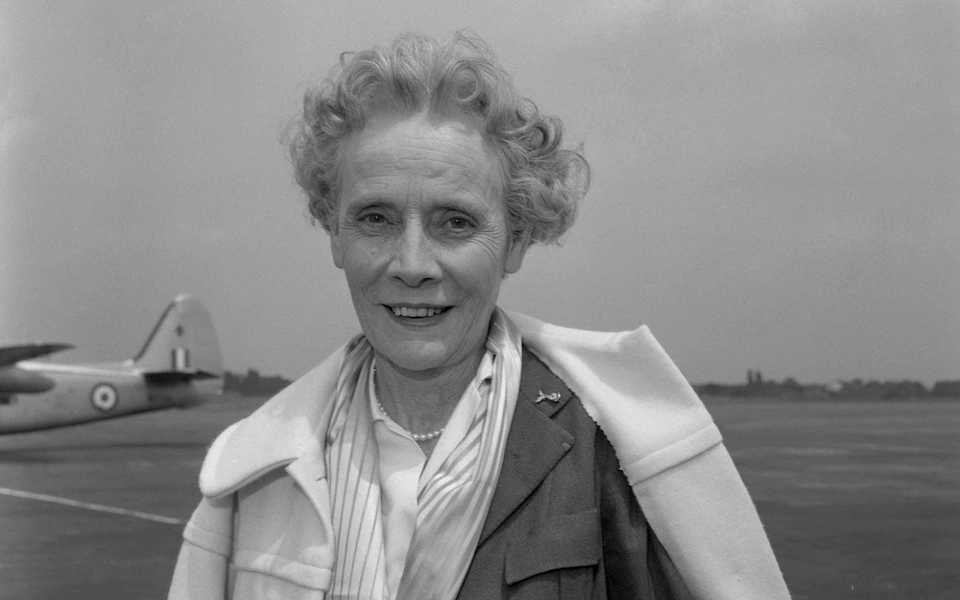
Comtesse de la Bourdonnaye: French aristocrat and early member of Paris’ Musée de l'Homme network, one of the first Resistance groups to form when France fell. She helped fund their clandestine newsletter and hid British soldiers and RAF in her lavish homes. She was arrested by the Gestapo, spent several months in Cherde-Midi prison, but once released continued her resistance by working with Hôpital des Enfants-Malades, which hid and transported Jewish children to safety.
Comtesse Bertranne d'Hespel: after her husband was killed in 1940, she sheltered, fed, and disguised 20 Allied airmen in her home near Reims. In her brief mention of Bertranne, the author of Sisters in the Resistance pointed out one very practical benefit of wealthy families harboring airmen. They were much more likely to speak English and have spare time—critical to helping flyboys sit still in hiding, sometimes for weeks. “These women,” she noted, “often had to use their entire repertoire of card games” to keep the men occupied and quiet.
Virginia d’Albert-Lake: A young American married to a Frenchman, living just south of Calais—right along the Comet Line (see Post #4). When a friend furtively asked if she could translate instructions to a group of downed Americans, she didn’t hesitate. All told, she and her husband hid or moved 66 airmen—before Virginia was caught as she biked to a safe house. One described the relief they’d all felt when meeting her: “There we were, walking into this apartment after some pretty hairy experiences, greeted by this beautiful woman who said, ‘Hi fellas, how’re you doing?...She had no fear whatsoever. She even showed us around Paris—with Gestapo all around!”
Virginia would survive Gestapo interrogation and Ravensbrück. I remembered this statement from her son, while fashioning my character Madame Gaulloise’s sobered but stubborn joie de vivre: “After her release, she felt she'd been given a second life—and loved it. She had a fantastic sense of humor. Very sharp, very American, very fun.”
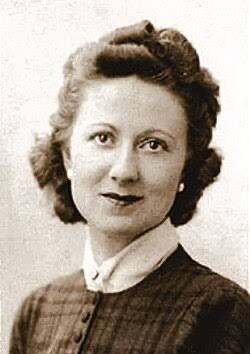
Lucie Aubrac: teacher and wife of one of the Resistance’s most important leaders, she helped found Libération-Sud. She didn’t move flyers, but I knew of her through her memoir, Outwitting the Gestapo. Her pulling off outrageous rescues of her hubby Raymond definitely influenced my portrait of Madame Gaulloise and the risks she’d dare. When heavily pregnant with her second child, Lucie walked into Lyon’s prison—this is where the infamous Gestapo “butcher of Lyon” Klaus Barbie operated, by the way. She feigned having been done wrong, that Raymond HAD to marry her. Delighted, the Nazis agreed, saying they’d take him to a priest to perform the ceremony, then as chilling example, shoot him on the church steps afterward. Calmly, she insisted on first going home to change into more appropriate dress. Again, swayed by her concocted story and anguish, they agreed. Lucie hurried home, arranged a rescue ambush with comrades, and made off with Raymond at the church!
Michou and The Comet: Chapter 8 of Under a War-Torn Sky opens with Henry, escorted by a Swiss guard, on a train, about to jump out of his skin he’s so antsy. They’ve just passed Thun. The Adelboden internment camp is only two stops away. Suddenly, a young, very pregnant woman struggles through the crowded aisle, looking for a seat. With characteristic polite concern, Henry stands to offer the expectant mother his seat, his escort grumbling permission.
And that’s how Henry’s harrowing escape begins!
For those who don’t know (or remember) this chapter, I don’t want to spoil what happens next. I’ll simply share that young woman was inspired by a 20-year-old Belgian student, code-named Michou, credited with saving the lives of 150 British and American flyers. She was legendary for her youth, savvy, and chameleon ability to play-act. So, my unnamed character first pretends to be pregnant, then not, then Henry’s girlfriend, then a coquette, all while alternatively speaking French, German, and English.
If you count the number of people in Chapter 8 involved in Henry’s nail-biter escape—however fleeting their role—the total might surprise you. I end the chapter: “Henry threw himself into a seat just as the train began to roll away from the station...He felt breathless from the secretive whirlwind of the day's events, the multitude of unannounced players. He'd been handled, just like a hot potato. He was a package no one wanted to be caught holding.”
And so it was for our lost boy flyers on the run and the people risking themselves and everyone they loved to help.
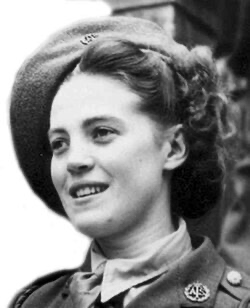
. 
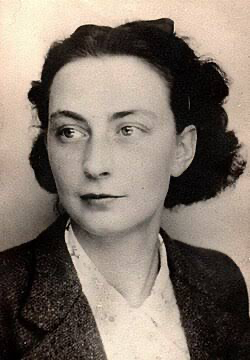
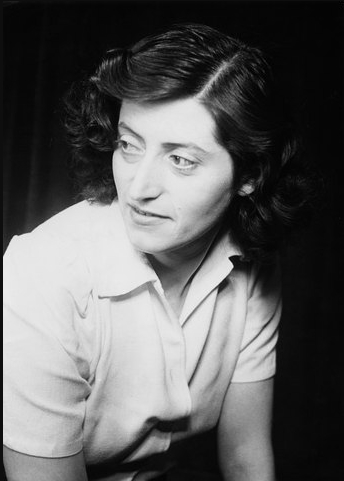
Michou (left) and her comrade, Comet Line founder and leader, 24-year-old Dédée de Jongh
Michou, (real name Michelle Dumon) was part of the Comet Line, WWII's most successful escape-line, thought to have saved 770 Allied flyboys, guiding them through 800 miles of Nazi-occupied territory: from Brussels to Paris to the southwest corner of France then over the Pyrenees to neutral Spain. The route was masterminded by a 24-year-old nurse, Dédée de Jongh. When she first arrived at the British consulate in Bilboa to present three RAF flyers she’d rescued and guided over the dangerous Pyrenees herself, the diplomats (male) didn’t believe her, and dared her to do it again to prove she was for real. She did—over and over—before being betrayed and sent to the Nazi’s infamous Ravensbrück (by the way, you must listen carefully to catch the one time she’s called by name, but the no-nonsense brave teenager who guides two downed aircrew in episode four of Masters of the Air is Michou!).
The Underground Press:
If in doubt about the importance of the press to fuel pushback to unjust, corrupt government and power-abusing leaders, look to WWII France. Resistance to Hitler’s repression bubbled up almost immediately after the Nazi invasion—sporadically, here and there—with courageous individuals spontaneously deciding to hide terrified Allied soldiers and flyers on the run or hurriedly leaving flowers in symbolic protest at WWI memorials celebrating a prior French victory over German forces in 1918.
And in underground, insurgent newspapers.
The first were generated by the tragically short-lived Musée de l’Homme network, and teachers in schools or universities with small printing presses. Students, defiant and infuriated by adults’ capitulation, braved stuffing their pockets full of leaflets and going to Paris’ apartment buildings to tuck them under doors or through mail-slots. Teens would start on the highest floor and move quickly down the buildings’ typically open, spiral staircases—beautiful and elegant but certainly no place to hide. That way they were already heading downward to the street to flee in a sprint in case a resident on an upper floor, sympathetic to Nazi and Aryan bigotry, opened their door to shout an alarm over the banister.
In typical French poeticism, they called these folded-up leaflets papillons. When opened—like a butterfly emerging from the bonds of a cocoon to unfurl its wings and fly—the clandestine little newspapers brought messages of hope and freedom.
Such dissident missives were very much part of resistance in Annecy—the exquisite lakeside French city, just over the Swiss border, which was Madame Gaulloise’s hometown. There, an innkeeper named Flora Saulnier waged her battle against the Nazis, starting with one of the Resistance’s most important dissident anti-Nazi papers, Combat, edited by Albert Camus, journalist and existential novelist.
Under Nazi occupation, circulating such journals was just as dangerous as moving downed flyers. But Flora did just that. Her L’ Auberge du Lyonnais became a critical hub for multiple resistance groups in the region, serving as meeting place and mailbox for clandestine messages.
Flora received, warehoused, and oversaw distribution of Combat. The paper and its maquis group was co-founded in 1940 by the sadly little remembered Berty Albrecht. Her previous experience as a publisher was largely responsible for the covert newspaper’s success and impact. A nurse and progressive activist, Berty had started a controversial journal, Le Problème Sexuel, back in 1933—to discuss family planning and better work conditions for women.
Thanks to her, and later its 30-year-old editor Camus, Combat’s circulation would reach a stunning several hundred thousand—a phenomenal number given how hunted its staff and anyone handling that paper was by the Gestapo and its infamous bulldog French equivalent, the Milice.
In addition to picking up, storing, and distributing Combat, Flora braved setting up networks for other insurgent tabloids, Libération and Franc-Tireur. A farmers’ daughter and ardent socialist, described by those who met her as measured, discreet, and reserved, Flora is emblematic of a very different type of resistant—in style, personality, political ideology, and education—from those personified in my glamorous, cultured Madame Gaulloise.
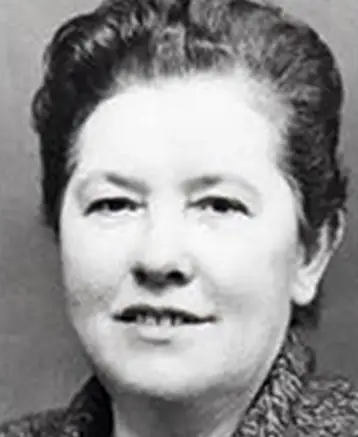
Flora Saulnier
But clearly Flora’s unobtrusive aura simply hid a steely resolve and pluck. In addition to serving as postmaster for Combat—dangerous enough work on its own—Flora also hid, fed, clothed and moved refugees of all sorts. She facilitated secret transports of Jewish children to safety and took in Spanish Republican outlaws as well as young French men fleeing the Reich’s Compulsory Labor deportations. She’d drive them and supplies along perilous mountain backroads, often patrolled by Nazi troops, to reach the Glières maquis groups (see below) operating in the Haute-Savoie Alps.
Flora was arrested on Christmas Eve’s Eve, 1943 when the dreaded SS raided her restaurant. She’d almost convinced them she was innocent of anything nefarious when a liaison maquis officer darted in. He’d rushed out the back door when the Germans stormed into the inn. But he’d returned, thinking they’d gone, to look for a knapsack he’d left behind in his panic—which the Nazis hadn’t noticed before his appearance.
It was, of course, full of incriminating material.
The maquis agent was killed. Flora was taken to the Gestapo’s much-feared Hotel Pax prison in Annemasse. She managed to save her husband by sending a warning through a sympathetic French guard. She survived interrogation—never giving up any information about her maquisard comrades—and a harrowing year at Ravensbrück.
It seems fitting to include Camus’ belief about the deep responsibility of journalists in troubled times: “When the press fails, democracy fails,” he wrote, adding this caveat: “A journalist who experiences no pangs of doubt or scruples, and who on some nights does not despair of being equal to the absurd but necessary work that he does week-in and week-out—in short, a journalist who does not judge himself daily—is not worthy of this profession.”
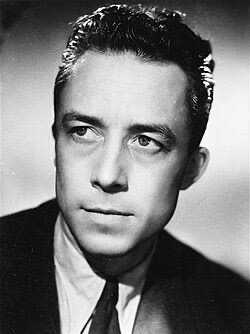
Writer Albert Camus
The Maquis:
The small paramilitary groups of mountain men and evaders who harassed German troops by sabotaging rail-lines and convoys and then disappeared into the night called themselves “the maquis,” not “the Resistance” per say. In typical French poetic symbolism, they’d named themselves for coarse Corsican underbrush favored as hiding spots by shepherds and fugitives from the law.
Groups formed sporadically and spontaneously at first, citizens horrified by Nazi repression instigating little acts of defiance. The first group to form in the Vercors (where Pierre and his mother live): eight men and one woman in Villard-de-Lans. A pharmacist, doctor, hotelier, banker, trader, transporter, electrician, tax collector, and farmer. The Resistance’s typical hodge-podge. In the Morvan, in central France, one maquis group chief had been a dance-band leader, another a lawyer, yet another a veterinarian. War and necessity had made them fighters and leaders.
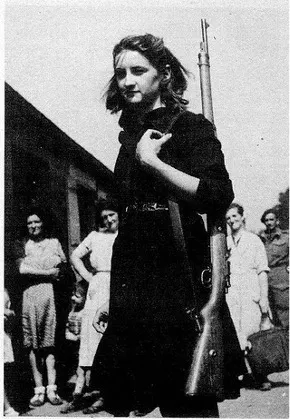
Women, young and old, might be recruited to forge identity papers (they were often more meticulous and neat in their handwriting than men) and to serve as innocuous couriers. Because women were expected to be out daily doing grocery shopping or other errands, they could more easily transport coded messages, parts of radio transmitters, or even weapons hidden in their handbags, woven baskets, or the hollow handlebars of their bicycles. After D-Day, some young women, like the one below, might also carry guns and engage in ambushes or sabotage (readers of Under a War-Torn Sky will recognize the inspiration for the fiery Claudette in all this).
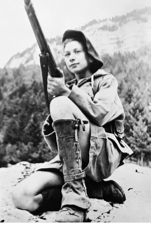
Maquis numbers grew after the Nazis took over the Vichy “free zone” in southern France and brutally implemented Compulsory Labor roundups in February 1943. Young men, mostly aged 18 to 24, would flee to the mountains ranges like the Glières or the Vercors to escape being shipped off to Nazi work camps. In the Vercors, they hid in that massif’s dense forests and caves, depending on villagers/farmers like Pierre’s mother to help keep them fed. Many were heartbreakingly young like these recruits below.
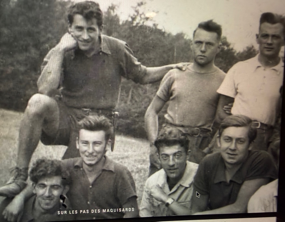
All maquis would—albeit sometimes grudgingly—move downed airmen. But these rough-living men had no qualms of executing any flyboy they distrusted as being a potential German mole (my father and Henry both experienced their gruff but life-saving savvy and grit).
Yves Farge, a journalist who’d rise to Resistance leadership, wrote: “The maquis! This word was first heard whispered, repeated in low voices, in cities like Lyon, where the mountains are close by. A clandestine word like the struggle itself of the French people. Far above the village the maquis watches, disperses, reforms, disappears, returns, attacks...they are spoken of with pride and tenderness (while) Germans and the filthy Vichy henchmen call them terrorists.”
Their motto Vivre Libre ou Mourir (“Live Free or Die”) was ominously apt. Their hit-and-run sabotage of German communications and troop transports could bring terrible reprisals—like a handful of maquisards breaking the rail tracks near Die and the consequent Nazi hostage-taking of Sainte-Croix villagers which I describe in this substack post (#12 of my anniversary journey series). Whether out of antisemitism, nationalistic ideology, greed, hunger, fear, or petty paybacks, collaborators in small villages—where everyone truly knew one another—would betray neighbors, like Pierre’s mother, to the Milice (the French secret police collaborating with the Nazis).
Allied command in London was impressed by the maquis’ bravery, their bold actions and fighters, and began supporting them. The British SOE (Special Operations Executive) parachuted in supplies and weapons plus French-speaking, radio-operator spies and weapons experts to train the civilian partisans. So, too, did the precursor to our CIA, the OSS (Office of Strategic Services).
The various maquis operated independently town to town, region to region. Often named for their leader or location (there was a maquis group specific to the Lente Forest in the Vercors, for instance) they could be highly suspicious of one another given their differing political beliefs and hopes for a future France. Some were communist, some socialists, others more “traditional” patriots and believers in France’s sovereignty.
They did all agree, however, on their hatred of Hitler and commitment to liberating France, whatever it took. So come D-Day, they all agreed to simultaneously cause as much trouble as possible—to discombobulate and divert, to prevent German units from rushing eastward to reinforce their comrades fighting on Normandy beaches. The maquis cut electrical grids to break Nazi communication, blew up railroad tracks and bridges, ambushed small convoys, and barricaded mountain passes and roads.
To learn more about the valiant maquis of the Vercors—where Pierre and his mother lived: The Vercors: Splendor and Tears, part 1 and The Vercors: Splendor and Tears, part 2.
To learn more about Maquis des Glières, near Annecy and the Swiss border: Tragedy and Triumph at the Glières Plateau.